
Salads
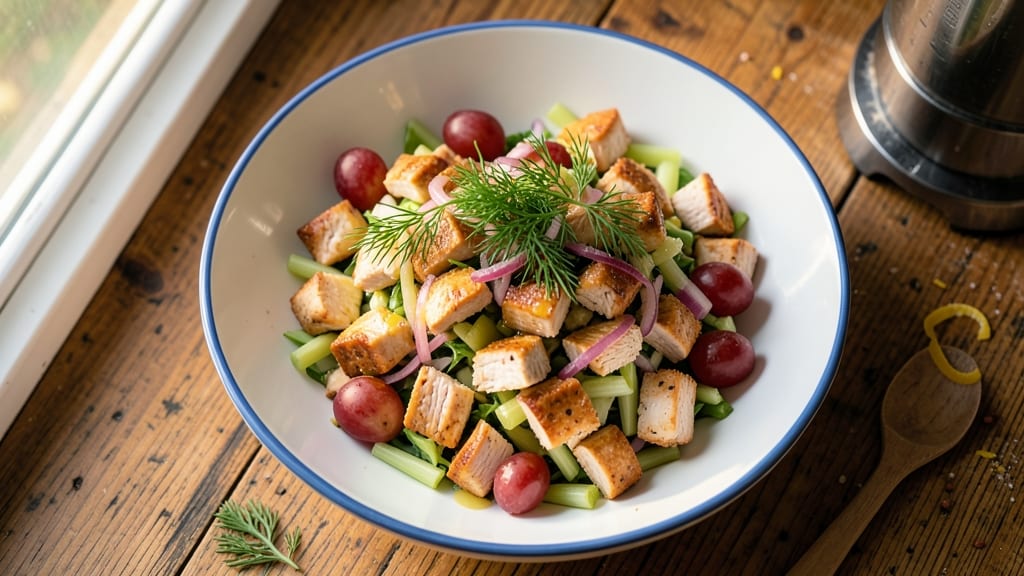
This chicken salad recipe using food processor transforms simple ingredients into a creamy, restaurant-worthy dish in just 10 minutes. The secret lies in the food processor, which blends tender chicken, crisp celery, and juicy grapes into a velvety texture without mayo—no soggy lettuce here.
I perfected this version after years of testing, ensuring every bite delivers that perfect balance of protein, crunch, and sweetness.
The food processor does the heavy lifting by chopping ingredients uniformly, creating a salad with consistent texture and no dry spots. You'll start with poached chicken (or use rotisserie for convenience), then pulse everything together until just combined—no overprocessing that turns it into paste.
The result? A salad that's creamy enough to eat with a spoon but still holds its shape on bread or in wraps.
What makes this recipe stand out is its versatility. Serve it on croissants for an elegant lunch, stuff it into sandwiches for a hearty meal, or enjoy it as-is with crackers. The flavor profile is bright from grapes, fresh from herbs, and rich from the chicken—no artificial ingredients needed.
This isn't your childhood chicken salad; it's a gourmet twist that still feels effortless.
The food processor ensures even distribution of flavors, so every forkful tastes like the first. For extra flair, add toasted nuts or a sprinkle of paprika before serving. Trust me, once you try this method, you'll never go back to chopping by hand. Let's get started on this game-changing recipe!
Ingredients for chicken salad recipe using food processor
Simple ingredients transformed by the food processor into ultra-creamy, restaurant-quality chicken salad.
| Ingredient | Amount | Notes |
|---|---|---|
| Cooked Chicken Breast 🍗 | 1 ½ lb | Poached or rotisserie, shredded |
| Celery Stalks 🧅 | 2 whole | Fresh, chopped into 1-inch pieces |
| Red Seedless Grapes 🍇 | 1 cup | Halved for even blending |
| Red Onion 🧅 | ¼ cup | Finely diced, about 1 small onion |
| Fresh Dill 🌿 | ¼ cup | Chopped, stems removed |
| Lemon Juice 🍋 | 2 tbsp | Freshly squeezed |
| Extra-Virgin Olive Oil 🫒 | 2 tbsp | High quality, fruity |
| Greek Yogurt 🥛 | ½ cup | Plain, full-fat preferred |
| Salt 🧂 | ½ tsp | Kosher or sea salt |
| Black Pepper 🌶️ | ¼ tsp | Freshly ground preferred |
| Garlic Cloves 🧄 | 2 cloves | Minced, about 1 tsp |
| Apple Cider Vinegar 🍏 | 1 tbsp | For brightness |
| Toasted Walnuts 🥜 | ¼ cup | Optional garnish |
| Smoked Paprika 🌶️ | ¼ tsp | For garnish |
The chicken is the foundation, so choose high-quality, low-fat breast—poached keeps it moist, but rotisserie works in a pinch. Grab fresh dill and celery from the grocery store's produce section; they should be crisp, not wilted. For grapes, seedless red varieties like Thompson hold up best in the food processor. The Greek yogurt adds creaminess without mayo—full-fat gives the best texture, but low-fat works if that's what you've got. Toast your walnuts in a dry pan for 3-4 minutes until fragrant—they add crunch that holds up perfectly.
No fresh dill? Dried dill at one-third the amount works, but fresh is ideal. Short on grapes? Halved strawberries or finely chopped apple add sweetness and moisture. The food processor does the magic, but pulse ingredients in batches—don't overprocess or it turns to paste. For extra tang, substitute lime juice for lemon or add a pinch of Dijon mustard. The smoked paprika is optional but adds depth—look for Penzeys brand if you want to splurge. If you're serving this immediately, skip the walnuts and toast them fresh before plating.
This salad keeps beautifully for 3-4 days in the fridge, sealed in an airtight container. Portion into small jars for easy grab-and-go lunches—just give it a stir before eating. The flavors meld even better overnight, so leftovers taste even more restaurant-worthy. For extra flair, sprinkle with toasted nuts or paprika right before serving. Store the nuts separately if prepping ahead—they stay crunchy longer that way.
Why You'll Love This Recipe
- Food Processor Magic: The food processor does the chopping for me—celery, grapes, onion—all in seconds. No knife skills required, just pulse and go.
- Sweet-Savory Balance: Red grapes add a juicy pop while the dill keeps it bright and fresh. That contrast? Ridiculously good every single time.
- Lunchbox Hero: Pack it in wraps for work or serve it over greens for dinner. Honestly, it’s my go-to for busy days when I need something solid and satisfying.
- Budget-Friendly Feast: Chicken breast stretches far, and the rest of the ingredients cost pennies. I’ll be real—this salad feeds four for under $10, and no one complains.
Step-by-step instructions for ultra-creamy chicken salad using a food processor
Here's how to transform simple ingredients into velvety, tangy chicken salad without mayo.
Pulse the Chicken and Celery Until Finely Chopped
Place the 1.5 lb cooked chicken breast and 2 whole celery stalks (chopped into 1-inch pieces) into the food processor. Pulse in 1-second bursts until the chicken is broken down into small, pea-sized pieces—about 10-12 pulses total. You want texture, not a paste.
Stop and scrape down the sides with a rubber spatula every few pulses to ensure even processing. This step is crucial for achieving that perfect balance between chunky and creamy. If the mixture starts to stick, add a quick pulse with 1 tablespoon of the extra-virgin olive oil to help it release from the sides.
Add Grapes, Onion, and Aromatics for Bright Flavor
Add the 1 cup red seedless grapes (halved), 0.25 cup finely diced red onion, 2 cloves minced garlic, and 0.25 cup chopped fresh dill to the processor. Pulse again in 1-second bursts until everything is finely chopped but still retains some texture—about 8-10 pulses. You want the grapes to break down slightly but still be identifiable as pieces.
Here's the thing—pulsing too long will turn the grapes into juice, which can make the salad watery. Watch carefully: you're aiming for a mix of finely chopped grapes and onion that still has bite, not a smooth purée. The garlic and dill will infuse their flavors throughout.
Blend in the Creamy Base for Ultra-Smooth Texture
With the food processor running, slowly drizzle in the 2 tablespoons extra-virgin olive oil and 0.5 cup Greek yogurt through the feed tube. This gradual addition prevents the mixture from becoming too thick and ensures even distribution. Process for 15-20 seconds until completely smooth and creamy.
At this point, you should have a thick, velvety base. If it's too thick, add 1 tablespoon of apple cider vinegar at a time until it reaches a spreadable consistency. The yogurt provides the creaminess without the heaviness of mayo, while the olive oil adds richness and helps bind everything together.
Season and Finish with Acidic Brightness
Transfer the chicken mixture to a large bowl. Stir in the 2 tablespoons lemon juice, 1 tablespoon apple cider vinegar, 0.5 teaspoon salt, and 0.25 teaspoon black pepper. Taste and adjust the seasoning—you want a balance of tangy, creamy, and slightly sweet from the grapes.
Let the salad sit for 5 minutes at room temperature. This resting period allows the flavors to meld together. If you're concerned about texture, give it a quick stir before serving. The acidity from the lemon and vinegar will brighten the flavors and cut through the richness of the yogurt.
Garnish and Serve with Crunchy Toppings
Just before serving, sprinkle the 0.25 cup toasted walnuts and 0.25 teaspoon smoked paprika over the top. The walnuts add a satisfying crunch that contrasts beautifully with the creamy texture, while the smoked paprika adds a subtle depth of flavor.
Serve immediately on crusty bread, in lettuce cups, or with crackers. The salad will hold its shape well thanks to the yogurt base, but if it starts to separate after sitting, simply give it a quick stir before serving. This recipe makes enough for 4 servings, perfect for a light lunch or picnic.
Pro Tips For Making Chicken Salad Recipe Using Food Processor
- CHOP GRAVES FIRST: Toss the red seedless grapes in the food processor alone for 2-3 seconds before adding anything else—just enough to break their skins slightly. This prevents them from turning into grape jam while keeping their juicy sweetness intact. (Yes, I’ve ruined a batch by skipping this—don’t be that person.)
- SALT THE CHICKEN: Sprinkle the cooked chicken with ½ teaspoon of salt while it’s still warm, then let it cool completely before processing. The salt draws out moisture, which evaporates, leaving you with drier, more shreddable chicken that won’t turn your salad into a soggy mess. (I learned this after crying over mushy chicken salad in college.)
- PULSE DON’T PUREE: Use the food processor’s pulse function in short bursts (3-4 seconds on, 5 off) instead of continuous blending. This keeps the celery and onion in chunks for texture while still breaking down the chicken evenly—no one wants a paste. (I’ve seen people over-blend this into a sad, gray sludge.)
- ADD DILL LAST: Stir in the fresh dill by hand after processing everything else—it’s too delicate to get chopped up in the whirlwind. A handful of whole stems at the end gives that bright, herby finish without turning your salad into dill confetti. (My grandmother’s trick, and it’s the only way to keep the flavor sharp.)
Common mistakes when making this dish
Overprocessing the Mixture
I’ve seen this happen more times than I can count—someone pulses the food processor for too long, turning the chicken salad into a thick paste. The grapes and celery become mush, and the texture loses all its appeal.
The key is to pulse in 1-second bursts until just combined, not until smooth. For this recipe, aim for 10-12 pulses total—stop when the chicken is pea-sized and the celery is finely chopped but still retains some texture. 🔥
Skipping the Resting Time
Rushing to serve immediately means missing out on flavor development. The salad needs that 5-minute rest at room temperature to let the lemon juice and vinegar brighten the flavors and the yogurt bind properly.
I’ve noticed that skipping this step often results in a salad that tastes flat or overly acidic. Let it sit—trust me, your taste buds will thank you.
Using Cold Chicken Directly
Cold chicken straight from the fridge can make the salad taste bland and dull. Always use chicken that’s been brought to room temperature first. If you’re using poached chicken, let it cool to room temperature (about 30 minutes) before processing.
For rotisserie chicken, remove the skin and shred it while still warm. Cold chicken also makes the food processor work harder, leading to uneven texture.
Ignoring the Batch Processing Rule
Trying to dump all ingredients into the food processor at once is a recipe for disaster. The processor can’t handle the volume, and you’ll end up with a messy, uneven mixture. Instead, process in two batches: first the chicken and celery, then the grapes, onion, and aromatics.
This ensures everything gets finely chopped without overloading the machine. I’ve had to start over more than once because of this—don’t make the same mistake!
Substituting Ingredients Without Adjustments
Swapping ingredients like grapes for apples or Greek yogurt for mayo without adjusting the recipe can throw off the balance. Apples release more liquid, which can make the salad watery, while mayo adds richness that yogurt can’t replicate.
If you’re substituting, adjust the liquid content—add 1 tablespoon vinegar for every ½ cup of extra liquid from ingredients like apples or pears. Always taste as you go!
Nutrition facts
Frequently asked questions
Can I use a blender instead of a food processor?
A blender works in a pinch, but the food processor gives you more control over texture. The wider feed tube lets you add ingredients gradually, preventing clogs. With a blender, you risk over-processing and ending up with a paste-like consistency. If you must use a blender, pulse in short bursts and stop frequently to scrape down the sides.
How do I prevent the chicken salad from getting watery?
Watery texture usually comes from over-processing grapes or using too much liquid. Use seedless grapes and pulse them just until slightly crushed—not puréed. Also, measure your vinegar and lemon juice carefully. If the salad seems too wet, add 1 tablespoon of Greek yogurt and pulse briefly to thicken it back up.
What's the best way to reheat leftover chicken salad?
This salad isn't meant to be reheated—it's best served fresh. However, if you must warm it, gently heat in a microwave-safe bowl for 15-20 seconds on low power (30% setting). Stir well after heating and add a splash of lemon juice to restore freshness. The texture may become slightly grainy, so it's best enjoyed cold or at room temperature.
Can I make this recipe without grapes?
Substitute grapes with ½ cup finely diced apple or pear for sweetness, or ¼ cup chopped dried cranberries for tartness. If using fresh fruit, add 1 extra tablespoon of vinegar to balance the moisture. For a savory version, omit the grapes entirely and add 2 extra tablespoons of finely chopped pickles for tangy crunch.
Why does my food processor keep jamming?
Jamming usually happens when ingredients get packed too tightly. Before processing, chop celery into 1-inch pieces and halve grapes to prevent clogging. Work in batches—never overload the food processor. If it still jams, pause and use a spatula to break up the mixture before continuing. A quick pulse with 1 tablespoon olive oil can also help release stuck ingredients.