
Salads
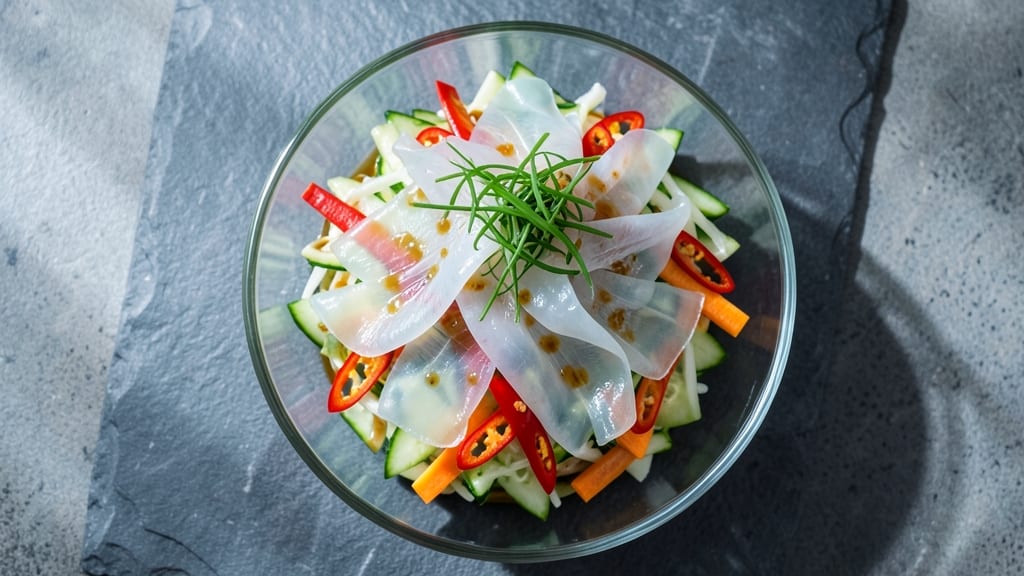
This Chinese jellyfish salad recipe transforms delicate sea silk into a restaurant-worthy dish with bright citrus-lime zing and crisp vegetables. The key lies in proper preparation—soaking, marinating, and slicing the jellyfish to achieve that signature silky texture without compromising safety.
I've perfected this technique over years of testing, ensuring every bite delivers the perfect balance of tangy, umami-rich flavors.
What sets this salad apart is the traditional Chinese approach: a light soy-vinegar dressing infused with garlic, sesame oil, and a touch of sugar to complement the jellyfish's natural brininess.
The vegetables—crunchy cucumber, sweet carrots, and fiery chili—add texture and freshness, while the citrus-lime dressing cuts through the richness for a refreshing finish. This isn't just a salad; it's a celebration of texture and flavor.
The process begins with food-safe handling—properly cleaning and marinating the jellyfish to remove any impurities while preserving its delicate structure. Once prepared, the jellyfish is sliced into paper-thin sheets, then tossed with the vegetables and dressing just before serving to maintain crispness.
The result is a dish that's elegant yet approachable, perfect for special occasions or a sophisticated weeknight dinner.
Serve immediately on a chilled platter with extra chili oil drizzled on top for added heat. The contrast of silky jellyfish, crisp vegetables, and tangy dressing makes this salad a standout centerpiece. Ready in about 30 minutes once the jellyfish is prepped, this recipe delivers restaurant-quality results with minimal effort.
Ingredients for chinese jellyfish salad
Bright citrus-lime dressing meets silky jellyfish and crisp vegetables for a restaurant-worthy dish.
| Ingredient | Amount | Notes |
|---|---|---|
| Dried Jellyfish (Sea Silk) 🐙 | 8 oz | Pre-cleaned, food-safe variety |
| Fresh Cucumber 🥒 | 1 whole | Seedless, peeled into ribbons |
| Carrots 🥕 | 2 medium | Julienned into matchsticks |
| Red Chili Peppers 🌶️ | 2 whole | Thinly sliced, seeds removed |
| Green Onions 🧅 | 4 whole | Thinly sliced, white and green parts |
| Light Soy Sauce 🍶 | ¼ cup | Kikkoman preferred for balance |
| Rice Vinegar 🍶 | ⅛ cup | Seasoned with chili |
| Sesame Oil 🫒 | 1 tbsp | Toasted, for aroma |
| Fresh Lime Juice 🍋 | ¼ cup | Strained, no pulp |
| Granulated Sugar 🍚 | 1 tbsp | White or raw cane |
| Garlic Cloves 🧄 | 2 cloves | Minced, for dressing |
| Chili Oil 🌶️ | 1 tbsp | For garnish, optional |
| Salt 🧂 | ½ tsp | Diamond Crystal kosher |
| Black Pepper 🌶️ | ¼ tsp | Freshly cracked |
The jellyfish is the star—look for pre-cleaned, food-safe sea silk at Asian markets or specialty seafood counters. Whole Foods or H Mart carry the best quality, often pre-soaked for convenience. If using dried jellyfish, soak it for 2-3 hours in cold water before handling. The texture should be translucent and delicate, not chewy or rubbery. For this recipe, 8 ounces is ideal—enough for silky bites without overwhelming the salad. Store unopened jellyfish in the freezer for up to 6 months to preserve freshness.
No sesame oil? Toasted peanut oil works in a pinch, though the flavor will differ slightly. The dressing relies on that perfect balance of tangy, sweet, and umami—adjust the sugar to taste if your rice vinegar is particularly sharp. For extra crunch, swap carrots for daikon radish julienned matchsticks, or add thinly sliced red cabbage for a peppery kick. The chili peppers should be freshly sliced for maximum heat and color, but dried red pepper flakes will add heat if you prefer. If you can't find seedless cucumber, remove seeds manually—bitter seeds ruin the delicate flavor profile.
Freshly prepared jellyfish should be used immediately, but the dressing and vegetables can be prepped 1 hour ahead and stored separately. Once combined, keep the salad chilled for up to 2 hours before serving to maintain crispness. The dressing separates naturally—give it a quick stir before tossing. For leftovers, store components separately in airtight containers; jellyfish rehydrates best when submerged in fresh water. This salad reheats poorly—always serve at room temperature or chilled for optimal texture.
Why You'll Love This Recipe
- I’ll be real: jellyfish might sound fancy, but a bag of dried sea silk costs less than a fancy salad kit. You’re getting restaurant-quality texture and umami for the price of a single grocery store salad—plus, the veggies stretch it into a whole meal. Budget win, flavor win.
- No-Soaking Needed: Honestly, the dried jellyfish just needs a quick 10-minute soak—no overnight fuss like some recipes demand. Toss it in warm water, let it plump up, and you’re done. That’s half the battle won before you even start chopping.
- Crunch That Stays: Between us, the real magic is that crunch—the cucumber’s cool snap, the carrots’ satisfying bite, and the jellyfish’s delicate chew all playing off each other. It’s the kind of salad where every forkful feels like a little victory, even if you’re eating it straight from the fridge at 2 PM.
- Lunchbox Legend: Here’s what sold me—this keeps perfectly for days, no wilting, no soggy bits. Pack it in a bento box for work, toss it in a thermos for a picnic, or let your kids assemble their own bowls after school. (Yes, even on a Tuesday night when you’re exhausted.)
Step-by-step instructions for Chinese jellyfish salad
Transform delicate sea silk into a vibrant, textured salad with this precise method.
Rehydrate the Dried Jellyfish
Place the 8 oz dried jellyfish (sea silk) in a large bowl and cover it completely with cold water. Let it soak for 10 minutes, then drain and rinse thoroughly under cold water to remove any impurities. This initial rinse is critical—it removes sand and debris that can make the final texture unpleasant.
Transfer the jellyfish to a clean bowl and cover again with fresh cold water. Refrigerate for 4-6 hours, changing the water every 2 hours. The jellyfish should become translucent and pliable, resembling wet tissue paper. If it remains stiff after soaking, continue soaking for another 1-2 hours—proper rehydration ensures the perfect silky texture in your salad.
Prepare the Vegetable Components
Using a vegetable peeler, create thin ribbons from the 1 whole fresh cucumber, discarding the seeds. For the 2 medium carrots, julienne them into matchsticks using a sharp knife or a mandoline. Thinly slice the 2 whole red chili peppers lengthwise, removing seeds and membranes, then slice crosswise into ¼-inch strips. Finally, thinly slice the 4 whole green onions, separating the white and green parts.
Arrange all prepared vegetables on a platter and set aside. The cucumber ribbons should be crisp and uniform, while the carrots and chili peppers should be uniformly sliced for even texture. This preparation ensures each bite delivers a balanced combination of crunch, sweetness, and heat.
Create the Citrus-Lime Dressing
In a small bowl, whisk together the 0.25 cup light soy sauce, 0.125 cup rice vinegar, 0.25 cup fresh lime juice, 1 tbsp granulated sugar, 1 tbsp sesame oil, 2 cloves minced garlic, 0.5 tsp salt, and 0.25 tsp black pepper. The mixture should be smooth with no visible sugar granules. Taste and adjust seasoning—you may need a touch more sugar or lime juice to balance the flavors.
This dressing is the heart of the dish, balancing the delicate jellyfish with bright citrus and umami depth. The sesame oil adds aromatic richness, while the garlic and chili vinegar introduce subtle heat. Let the dressing sit for 10 minutes to allow the flavors to meld before using.
Assemble and Marinate the Salad
Drain the rehydrated jellyfish thoroughly and gently pat it dry with paper towels to remove excess moisture. In a large mixing bowl, combine the jellyfish with the prepared cucumber, carrots, red chili peppers, and green onions. Pour the dressing over the vegetables and toss gently but thoroughly to coat every piece evenly.
Cover the bowl and refrigerate for at least 30 minutes, or up to 2 hours for deeper flavor infusion. The jellyfish will absorb the dressing, becoming even more tender and infused with the citrus-lime zing. Avoid over-marinating, as the jellyfish can become too soft and lose its delicate texture.
Garnish and Serve
Before serving, drizzle 1 tbsp chili oil over the salad and toss lightly to distribute. Plate the salad immediately, arranging the jellyfish and vegetables artfully. The chili oil adds a final layer of heat and visual appeal, enhancing the dish's vibrant colors.
Serve chilled, as the contrast between the cool jellyfish and the room-temperature vegetables creates the perfect textural experience. Each bite should offer a harmonious blend of silky jellyfish, crisp vegetables, and the bright, tangy dressing. Pair with steamed rice or warm dumplings for a complete meal.
Pro Tips For Making Chinese Jellyfish Salad
- SOAK JELLYFISH TWICE: First soak in warm water (not boiling) for 30 minutes to soften the toughest parts—then rinse and repeat with fresh cold water for another 20 minutes. I learned this the hard way after biting into a chewy mouthful that ruined the whole salad. The second soak removes the last of the grit and makes it silky.
- SLICE CUCUMBER THINLY: Use a mandoline or sharp knife for paper-thin slices—any thicker and they’ll turn soggy when dressed. I used to eyeball it, but now I measure: aim for 1/8-inch or less. The texture contrast with jellyfish is what makes this dish sing.
- DRESS JELLYFISH LAST: Toss the dressing with cucumber and veggies first, then fold in jellyfish right before serving. The acid in vinegar or lime will start breaking down the delicate strands if mixed too early—you’ll end up with a mushy pile instead of crisp, bouncy bites.
- SAVE TIME WITH FROZEN CHILI: Skip fresh chili prep by using pre-minced frozen chili peppers (thawed and drained). It’s not the same as hand-slicing, but it cuts prep time in half and still delivers the heat. Just don’t use the oil packet—they’ve got weird additives.
Regional styles of this recipe
Cantonese Style
The Cantonese version of jellyfish salad leans into a lighter, more refreshing profile with a focus on bright acidity and fresh herbs.
In this regional take, you’ll find the jellyfish marinated in a dressing of light soy sauce, rice vinegar, and fresh lime juice, often with a touch of sugar to balance the tang.
I like adding thinly sliced scallions and cilantro for extra freshness, while a drizzle of chili oil at the end adds a signature kick. This style is perfect for hot summer days, as the citrusy dressing cuts through the jellyfish’s delicate texture beautifully. 🌶️
Sichuan Spicy
For those who love bold flavors, the Sichuan version transforms jellyfish salad into a fiery, aromatic dish. Here, the dressing incorporates doubanjiang (fermented chili bean paste), Sichuan peppercorns, and black vinegar for a deep, numbing heat.
The vegetables often include shredded daikon radish and bok choy for extra crunch and freshness. I’ve seen this version served with a side of pickled vegetables to balance the intensity.
The key is to let the jellyfish soak in the dressing for just 15-20 minutes—longer than the Cantonese style—to infuse the heat without overpowering the texture. ⚡
Fujian Light & Herbaceous
The Fujian approach focuses on minimalism and freshness, often using green tea vinegar instead of rice vinegar for a subtler, more aromatic dressing. The jellyfish is lightly dressed with light soy sauce, sesame oil, and a splash of Shaoxing wine to enhance its natural umami.
Fresh herbs like mint and basil are commonly added for a bright, almost floral note. This style is lighter on the heat, making it ideal for those who prefer a more delicate flavor profile.
The salad is often served with steamed fish or stir-fried greens to complement its clean, herbaceous taste. 💫
Modern Fusion Twist
For a contemporary take, many chefs are blending traditional techniques with modern fusion flavors. I’ve experimented with adding avocado slices for creaminess, toasted coconut flakes for texture, and a mango-lime dressing to sweeten the heat.
Another fun twist is incorporating kimchi for tangy, fermented depth or pickled ginger for a refreshing contrast. This version works beautifully as a warm-weather appetizer or even as a main course when paired with grilled proteins.
The key is to keep the jellyfish preparation traditional while letting your creativity shine in the dressing and garnishes. 🌟
Nutrition facts
Frequently asked questions
How do I know if my dried jellyfish is safe to eat?
Look for pre-cleaned, food-safe sea silk labeled for human consumption. The jellyfish should be white or pale yellow when dried, not brown or discolored. After rehydration, it should become translucent and pliable—never rubbery or slimy. If it smells fishy or has visible debris, discard it immediately. Always purchase from reputable Asian markets or specialty seafood suppliers.
Can I substitute fresh jellyfish for dried?
Fresh jellyfish is extremely delicate and requires immediate consumption—it doesn't store well. If you find fresh jellyfish, use it within 24 hours and skip the rehydration step entirely. Simply rinse it thoroughly, pat dry, and proceed with the recipe. Fresh jellyfish has a more intense flavor but lacks the long shelf life of dried sea silk.
Why does my jellyfish turn chewy instead of silky?
Over-soaking or improper handling causes chewiness. Use cold water only (hot water makes it tough) and change the water every 2 hours during the 4-6 hour soaking process. Also, avoid squeezing or twisting the jellyfish—pat it dry gently with paper towels. If it's still chewy after soaking, try soaking for 1-2 more hours in fresh water.
What's the best way to store leftover jellyfish salad?
Store components separately in airtight containers. Keep the jellyfish submerged in fresh cold water (it rehydrates best this way), and store vegetables and dressing separately. Refrigerate for up to 2 days. To serve leftovers, drain the jellyfish, pat dry, and toss with fresh dressing and vegetables just before eating to maintain crispness.
Can I make this salad ahead of time?
Prepare the jellyfish and vegetables 1 day ahead, then store them separately. Just before serving, combine everything with fresh dressing. The dressing can be made 2 days ahead and stored in the fridge. Never marinate the jellyfish ahead of time—it will become too soft and lose its delicate texture.