
Salads
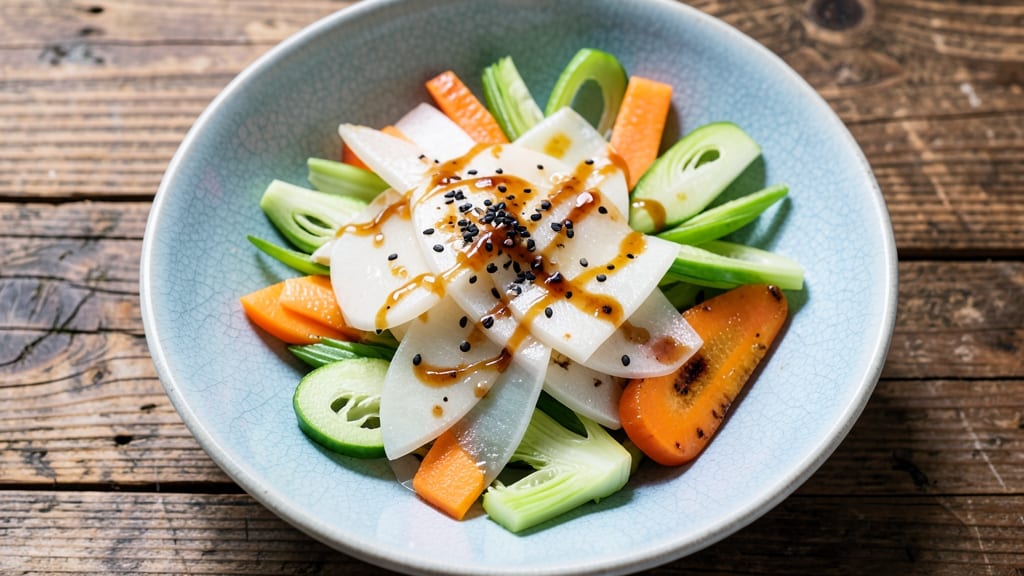
This Chinese radish salad recipe transforms humble ingredients into a vibrant, crisp dish that captures the essence of Chinese cuisine. 💛 The secret lies in thinly sliced daikon radish, celery crowns, and crisp carrots tossed in a bright sesame dressing that balances sweet, tangy, and nutty flavors.
I developed this vegetarian version after discovering how fresh radishes elevate simple salads with their peppery crunch and refreshing bite.
The salad's beauty comes from its perfect texture contrast—crisp vegetables paired with a glossy, aromatic dressing that clings to every slice. Traditional Chinese techniques like quick pickling and proper slicing ensure the radishes stay crisp rather than soggy.
This dish is more than just a side; it's a celebration of fresh produce and bold flavors that work equally well as an appetizer or light main course.
What makes this recipe stand out is its simplicity combined with restaurant-quality results. With just 10 minutes of prep and 15 minutes of marinating, you'll have a salad that's vibrant, refreshing, and packed with umami from soy sauce, sesame oil, and a touch of sugar.
The dressing's peppery sesame zing cuts through the radishes' natural sharpness, creating harmony in every bite.
Serve this salad chilled as a refreshing starter or alongside grilled meats and rice for a complete meal. The crisp textures and bright flavors make it equally at home on a summer picnic table or as part of a festive Chinese-inspired feast. Let's create this dish together!
Ingredients for chinese radish salad
Fresh produce and bold flavors transform simple ingredients into this vibrant Chinese radish salad.
| Ingredient | Amount | Notes |
|---|---|---|
| Daikon Radish 🥕 | 2 lb | Thinly sliced, crisp variety |
| Celery Crowns 🧅 | 1 whole | Thinly sliced, leaves reserved |
| Carrots | 2 medium | Julienned, about 1 cup |
| Sesame Oil 🫒 | 2 tbsp | Toasted sesame preferred |
| Rice Vinegar 🍶 | 3 tbsp | Seasoned preferred |
| Soy Sauce 🥢 | 2 tbsp | Low-sodium preferred |
| Sesame Seeds 🌾 | 1 tbsp | Toasted, for garnish |
| Granulated Sugar 🍯 | 1 tbsp | Light brown preferred |
| Garlic Cloves 🧄 | 2 cloves | Minced, for dressing |
| Ginger Root 🌿 | 1 inch | Fresh, grated |
| Lime Juice 🍋 | 1 ½ tbsp | Freshly squeezed |
| Salt 🧂 | ½ tsp | Kosher or sea salt |
| Black Pepper 🌶️ | ¼ tsp | Freshly ground |
| Red Chili Flakes 🔥 | ½ tsp | Optional, for heat |
The daikon radish is the star—pick firm, crisp varieties with no soft spots. Asian markets often carry the best quality, but most grocery stores stock them too. Look for radishes that feel heavy for their size, with smooth, unblemished skin. Celery crowns should be crisp with no brown spots—Trader Joe's has excellent quality if you're in the U.S. For the carrots, organic julienne strips save time, but whole carrots work if you've got a mandoline. The ginger and garlic should smell fresh and aromatic—no musty odors. Toast your sesame seeds in a dry pan for 30 seconds before using for maximum flavor.
No sesame oil? Toasted peanut oil works in a pinch, though the flavor will differ slightly. Substitute apple cider vinegar for rice vinegar if needed, but the dressing won't be quite as balanced. For a sweeter touch, maple syrup replaces sugar at a 1:1 ratio. If you're avoiding gluten, use tamari instead of soy sauce. The carrots can be swapped for julienned cucumber or bell pepper strips for a different texture. For extra crunch, add thinly sliced scallions—they're optional but add freshness. The dressing keeps for 5 days in the fridge, so make extra if you plan to use it on other dishes.
Store the radish and carrots in separate containers with a damp paper towel to maintain crispness for up to 5 days. The celery crowns will last 1 week in the fridge if wrapped tightly. The dressing can be made 1 day ahead—it actually tastes better after flavors meld. For serving, toss everything together right before eating to preserve that perfect crunch. This salad holds up beautifully for 2 days in the fridge if stored properly, though texture may soften slightly. Pack it in an airtight container with the dressing on the side if you're prepping ahead.
Why You'll Love This Recipe
- No Knife Skills Needed: I swear by this one—just slice the daikon and carrots into thick half-moons, no julienne required. The celery crowns add crunch without fuss, and honestly? My board stays cleaner than when I make slaw.
- Sesame Magic: That first drizzle of sesame oil? It’s the secret weapon—nutty, toasty, and it clings to every shred like it’s been waiting for this salad. The rice vinegar cuts through the earthiness of the daikon, leaving you with a bite that’s bright and addictive.
- Lunchbox Hero: Between us, this is my go-to for packed lunches—holds up for days, stays crisp, and tastes like you actually cooked it. Toss it with leftover rice or serve it cold; it’s the side that makes even the simplest meal feel special.
- Pantry Staple Power: Daikon lasts forever, carrots are cheap, and celery? You’ll use it before it wilts. The dressing costs pennies but transforms everything—great for when you’re broke, busy, or just don’t feel like shopping.
Step-by-step instructions for Chinese radish salad
This refreshing salad delivers crisp textures and bold flavors—here's how to assemble it perfectly.
👨🍳 Step 1: Prep All Vegetables for Maximum Crunch
Start with the 2 lb daikon radish—use a sharp mandoline or knife to slice it into ⅛-inch thick rounds. For the 1 whole celery crown, cut into ¼-inch thick slices, reserving the tender leaves for garnish. The 2 medium carrots should be julienned into ¼-inch thick matchsticks using a peeler or knife.
Work quickly to maintain crispness—place each vegetable in separate bowls as you cut. I like to toss the radish slices immediately with ½ tsp salt to draw out excess moisture, then pat dry with paper towels. This step prevents a soggy salad later. For the celery, remove any tough strings by pulling them out with your fingers before slicing.
🍳 Step 2: Create the Signature Sesame-Ginger Dressing
In a small bowl, whisk together the 2 tbsp sesame oil, 3 tbsp rice vinegar, 2 tbsp soy sauce, 1 tbsp granulated sugar, 1.5 tbsp lime juice, 0.5 tsp salt, and 0.25 tsp black pepper. Add the 2 cloves minced garlic and 1 inch grated ginger root, then mix until fully combined.
Taste and adjust—you might want to add a pinch more sugar to balance the acidity or a splash of lime juice for brightness. This dressing is the heart of the salad, so don't rush this step. The ginger and garlic should be fully incorporated but not overpowered. Set the dressing aside while you prepare the remaining components.
🥘 Step 3: Assemble and Toss the Salad
In a large mixing bowl, combine the sliced daikon radish, celery crowns, and julienned carrots. Pour the dressing over the vegetables and toss gently but thoroughly using your hands or tongs. The salad should be evenly coated but still retain some crispness—don't overmix or the vegetables will soften.
Let the salad sit for 5 minutes at room temperature while you toast the 1 tbsp sesame seeds in a dry skillet over medium-low heat for 1-2 minutes until golden and fragrant. This adds a nutty depth that complements the peppery dressing. Sprinkle the toasted sesame seeds over the salad just before serving.
🔪 Step 4: Garnish and Serve Immediately
Transfer the salad to a platter or individual bowls. Garnish with the reserved celery leaves and a final sprinkle of 0.5 tsp red chili flakes if you like a bit of heat. The contrast of textures—crisp radish, tender celery, and slightly chewy carrots—makes this salad truly special.
Serve immediately for the best texture. The flavors will meld beautifully, but the vegetables will start to soften after 15 minutes. Pair with grilled meats or steamed dumplings for a complete meal. Each bite should deliver a perfect balance of sweet, tangy, and umami flavors with that satisfying crunch.
Pro Tips For Making Chinese Radish Salad
- SHRED DAIKON THIN: The texture of this salad hinges on the radish—thin, even slices (about 1/8-inch thick) create bite-sized pieces that hold up better and soak up dressing without turning soggy. I used to slice it thick like a lazy person, and it always felt too heavy; now I use a mandoline for consistency (or a sharp knife if you’re brave).
- SALT CELERY CROWNS FIRST: Celery crowns wilt like sad lettuce if you toss them in dressing too soon. Toss them with a pinch of salt and a splash of cold water, let sit 5 minutes, then drain well—this crisps them up and keeps them from turning to mush in the salad.
- DRESS IT LAST MINUTE: Sesame oil and rice vinegar smell amazing, but they’ll make your salad taste like a sad, overpowering perfume if mixed too early. Wait until everything’s chopped and tossed, then drizzle just before serving—this keeps the flavors bright and the crunch intact.
- JULIENNE CARROTS UNIFORM: Uneven carrot sticks look messy and cook at different rates. Use a peeler to shave them into thin, even matchsticks (about 1/4-inch wide) instead of chopping—this keeps them crisp and prevents any one piece from turning limp while others stay crunchy.
Essential equipment for chinese radish salad
Mandoline Mastery
For perfect ⅛-inch thick radish slices, a mandoline slicer is my top recommendation—it delivers consistent, restaurant-quality cuts. I use the OXO Good Grips model with a safety guard because it's easy to control and clean.
If you don't own one, a sharp chef's knife and steady hand work too, but practice on a carrot first to get the rhythm right. Always slice against the grain for longer strands and better texture. 🔪
Sesame Oil Storage
Store your sesame oil in a dark glass bottle in the fridge after opening to prevent rancidity. I keep mine in the front of my fridge door where it's cooler and easier to access. Regular bottles lose flavor faster when exposed to light and heat. For extra longevity, transfer any unused portion to a small airtight container—just
Celery Prep Tools
A celery julienne peeler (like the Microplane) transforms whole celery crowns into delicate ribbons in seconds. For thicker slices, I use a Japanese santoku knife with a pull-cut technique—this gives me clean ¼-inch thick pieces without crushing. Remove the tough outer strings first by pulling them out with your fingers while the celery is still whole. Never skip this step or your salad will have unpleasantly chewy bits. 🧅
Dressing Whisk Essentials
For the perfect emulsion in your dressing, I recommend a balloon whisk or small fork—both work well for combining the sesame oil and vinegar without creating suds. If you're making this frequently, consider a mini food processor for quick blending, but whisking gives you better control over texture.
Always whisk in a small bowl to prevent spills when adding the toasted sesame seeds later. 🥄
Serving Presentation
For elegant serving, I use wide, shallow bowls or a long platter to showcase the salad's vibrant colors. A clear glass bowl lets guests see the beautiful layers of radish, celery, and carrots. For extra flair, arrange the salad in concentric circles with the darkest greens in the center.
Keep your red chili flakes and sesame seeds in small spice dishes on the side so everyone can customize their heat level. 🍽️
Time-Saving Shortcuts
Save time by buying pre-sliced daikon radish from Asian markets—it's often sold in vacuum-sealed packs already cut into perfect slices. For the dressing, make a double batch and store it in a small jar in the fridge for up to 5 days.
I also keep pre-minced garlic and ginger in the freezer—just thaw and add directly to the dressing. A salad spinner helps dry the vegetables faster after salting, cutting prep time by half. ⏱️
Nutrition facts
Frequently asked questions
Can I substitute regular radish for daikon in this recipe?
Regular radishes are much smaller and more pungent than daikon, so they won't work as a direct substitute. Daikon's mild, crisp texture is essential for this salad. If you can't find daikon, try jicama or cucumber for a similar crunch, but the flavor will differ significantly.
How do I keep the vegetables extra crisp for longer?
Pat all sliced vegetables thoroughly dry with paper towels after cutting, then toss with ½ tsp salt for 10 minutes before rinsing. Store in separate airtight containers with a paper towel between layers. Keep the dressing separate until ready to serve to prevent sogginess.
What's the best way to adjust the dressing for spicier preferences? Start with the 0.5 tsp red chili flakes as written, then add more to taste. For extra heat, mix ½ tsp gochujang paste into the dressing. For a smoky kick, add ¼ tsp smoked paprika.
Can I make this salad ahead of time?
Prepare all components separately and store them in the fridge for up to 2 days. Keep the dressing in a jar and toss everything together just before serving. The vegetables will stay crisp if stored properly, but the texture will soften slightly over time. For best results, assemble within 30 minutes of serving.
What other vegetables pair well with daikon in this salad?
Try adding thinly sliced scallions, shredded cabbage, or julienned bell peppers for extra color and crunch. For a more traditional Chinese touch, include thinly sliced water chestnuts or bok choy leaves. Just be mindful of texture balance—stick to crisp vegetables.