Salads
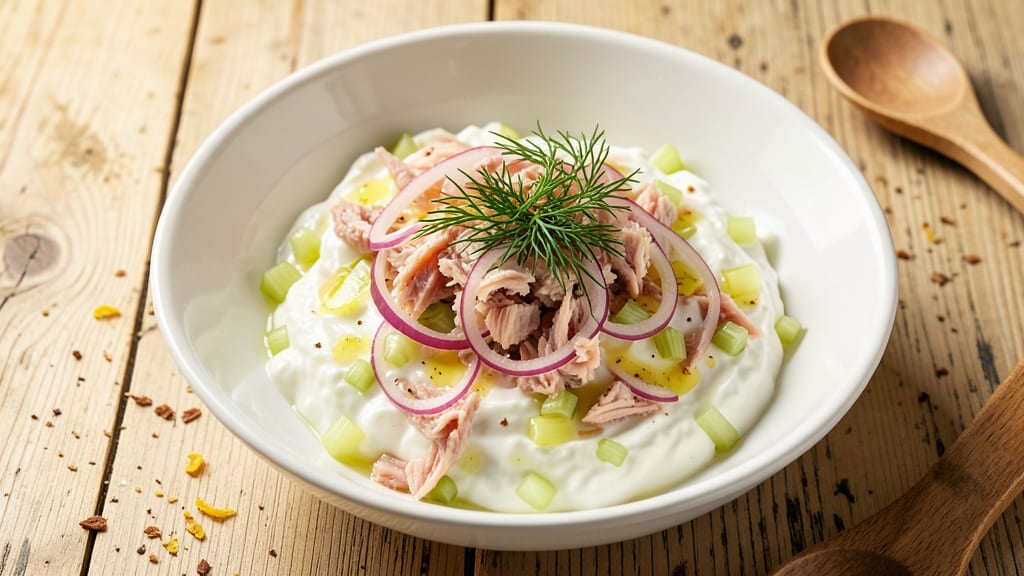
This egg-free tuna salad delivers all the classic flavors without relying on mayo—just crisp celery crowns, bright lemon, and a creamy Greek yogurt base that keeps everything fresh and satisfying.
The secret lies in balancing textures: finely diced celery for crunch, tender red onion for bite, and a squeeze of lemon to cut through the richness.
I developed this recipe after realizing how often egg-free versions fell flat, so I focused on what truly makes tuna salad shine—bold seasoning and perfect texture.
The beauty of this version is its versatility—it works as a standalone salad, stuffed into lettuce wraps, or piled high on crusty bread. Using Greek yogurt instead of mayo adds protein while keeping the salad light, and the lemon twist brightens every bite.
For extra creaminess without eggs, avocado or vegan mayo work beautifully too. What you’ll end up with is a tuna salad that’s tangy, crunchy, and packed with flavor, proving you don’t need eggs to make it perfect.
This recipe comes together in just 10 minutes with simple ingredients you likely already have on hand. The celery gets finely chopped for that signature crunch, while the lemon juice and fresh herbs add a refreshing lift.
Whether you’re meal prepping for the week or whipping up a quick lunch, this tuna salad delivers restaurant-quality results without the fuss.
Serve it chilled on a bed of greens, stuffed into sandwiches, or as a topping for crackers—it’s the ultimate no-fuss lunch that’s both satisfying and nutritious. The best part? No eggs required, so it’s perfect for those with dietary restrictions or anyone looking for a lighter take on a classic.
Ingredients for tuna salad recipe no egg
Crisp celery crowns, zesty lemon, and creamy Greek yogurt—this egg-free tuna salad is packed with texture and flavor.
| Ingredient | Amount | Notes |
|---|---|---|
| Canned Tuna in Water 🐟 | 2 cans | Drained and flaked finely |
| Plain Greek Yogurt 🥛 | ¾ cup | Full-fat for creaminess |
| Fresh Lemon Juice 🍋 | 2 tbsp | Freshly squeezed |
| Celery Stems 🧅 | 2 whole | Finely diced for crunch |
| Red Onion 🧅 | ¼ cup | Finely diced, tender bite |
| Fresh Dill 🌿 | 2 tbsp | Chopped, vibrant flavor |
| Fresh Parsley 🌿 | 1 tbsp | Chopped, bright finish |
| Dijon Mustard 🍯 | 1 tbsp | For tangy depth |
| Olive Oil 🫒 | 1 tbsp | Extra-virgin for richness |
| Kosher Salt 🧂 | ½ tsp | To taste |
| Ground Black Pepper 🌶️ | ¼ tsp | Freshly ground |
| Avocado (optional) 🥑 | ¼ whole | Mashed for extra creaminess |
The tuna is the star, so grab high-quality canned tuna in water—none of that oil-packed stuff. Wild Planet or Starkist are my go-tos, but any brand works. For the celery, look for crisp, firm stems—they should snap when bent, not feel rubbery. Fresh herbs are a game-changer here, but dried dill or parsley at half the amount will work in a pinch. The Greek yogurt should be plain and full-fat (trust me on the full-fat version—it makes a difference). If you're feeling fancy, grab some fresh dill from the grocery store's produce section—it's brighter than dried and worth the extra minute to chop.
No Greek yogurt? Vegan mayo or mashed avocado keeps things creamy without eggs. Swap the Dijon mustard for regular yellow mustard if that's what you've got, but the Dijon adds that extra tang. The avocado is optional, but if you're making this for a crowd, add it for that ultra-creamy texture. For extra crunch, toss in a handful of chopped walnuts or pecans. The lemon juice should be freshly squeezed—bottled juice lacks that bright punch. If you're meal prepping, squeeze the lemon just before mixing everything together to keep the salad fresh longer. And if you're worried about the tuna being too fishy, add a pinch more salt—it balances the flavors perfectly.
This salad keeps best in the fridge for 3-4 days, stored in an airtight container. The flavors actually get better as it sits, with everything melding together. For meal prep, I portion it into small containers—perfect for lunches or quick snacks. If the celery starts to wilt, just chop it a little finer when you're ready to eat. The yogurt base might separate slightly, but give it a quick stir before serving. And if you're serving it right away, garnish with extra fresh herbs—it makes the whole dish look (and taste) restaurant-quality.
Why You'll Love This Recipe
- No Egg? No Problem: I swear by this version—it’s just as creamy (thanks to that Greek yogurt) and holds together perfectly without any binding fuss. The yogurt’s tang cuts through the tuna’s richness, and honestly? I don’t miss the egg at all.
- Bright & Crunchy: That lemon juice is the star—it keeps things fresh and zesty, while the celery and red onion add a satisfying crunch. It’s bright enough to eat straight from the bowl, but still packs enough flavor to shine in wraps or sandwiches.
- Meal Prep MVP: I make a big batch on Sundays and it lasts all week. The yogurt keeps it moist, and the celery stays crisp if you store it right. Toss it in lunchboxes, over greens, or with crackers—it’s always a win.
- Budget-Friendly Flex: Canned tuna and a tub of Greek yogurt stretch this recipe for days. Plus, the onion and celery are cheap staples I always have on hand. It’s a lunch that won’t break the bank, but feels like a treat.
Step-by-step instructions for tuna salad recipe no egg
Here's how to create a luscious, egg-free tuna salad with vibrant flavors and perfect texture.
Flake the Tuna and Prep Vegetables
Open the 2 cans of drained tuna and flake the fish gently with a fork into a medium bowl. You want the flakes to be small but not mushy—this creates the perfect bite texture. While you work, finely dice the 2 whole celery stems and 0.25 cup red onion. I like to use a sharp chef's knife for this step, cutting the celery lengthwise first to create neat sticks before dicing into small cubes. The onion should be small enough to disappear when mixed but still provide that fresh crunch.
Set aside the diced celery and onion—we'll add them later to preserve their crisp texture. This prep work is key; if the vegetables get too soft, they'll turn the salad mushy. Trust me, you'll notice the difference when everything comes together.
Mix the Creamy Base
In the same bowl with the tuna, add the 0.75 cup plain Greek yogurt, 1 tbsp Dijon mustard, and 1 tbsp olive oil. Using a sturdy spoon or spatula, gently fold everything together until just combined. The yogurt should coat the tuna evenly, creating a creamy base without overworking the mixture. If you stir too vigorously, you'll break up the tuna flakes and lose that desirable texture.
Next, add the 2 tbsp fresh lemon juice and mix again. The lemon brightens the entire salad, cutting through the richness of the yogurt and tuna. You'll immediately notice the color transform from pale to vibrant. Here's where it gets fun—taste the mixture now. It should be tangy and slightly thick, but if it feels too dry, we'll fix that next.
Add Herbs and Seasonings
Chop the 2 tbsp fresh dill and 1 tbsp fresh parsley finely, then add them to the bowl. The herbs should be small enough to distribute evenly but still recognizable. Sprinkle in the 0.5 tsp kosher salt and 0.25 tsp ground black pepper, then gently fold everything together. You want the herbs to brighten the salad while the pepper adds a subtle kick. Taste again—this is the moment that matters: the flavors should be balanced with a nice tang from the lemon and mustard.
If the mixture feels too thick, add 1-2 teaspoons of water at a time until it reaches a spreadable consistency. The goal is a smooth, creamy texture that's easy to scoop and serve. This is where the yogurt truly shines—it's lighter than mayo but just as satisfying.
Incorporate the Crunchy Elements
Now add the diced celery and red onion you prepped earlier. Gently fold them in until evenly distributed throughout the mixture. The celery crowns will add that signature crunch, while the onion brings a subtle sharpness that balances the richness. If you're using the optional 0.25 whole avocado, mash it first with a fork and fold it in now for extra creaminess. The avocado adds a velvety texture and healthy fats that make this salad even more satisfying.
Give everything one final taste and adjust the seasoning if needed. The salad should be bright, tangy, and perfectly balanced—no single flavor should overpower the others. Here's the thing—this salad tastes best when made fresh, so don't wait to serve it. The flavors meld beautifully right away, and the celery stays crisp for hours in the fridge.
Chill and Serve
Transfer the tuna salad to an airtight container and refrigerate for at least 30 minutes before serving. This chilling time allows all the flavors to fully develop and meld together. The yogurt will firm up slightly, making it easier to scoop and serve. I like to press a piece of plastic wrap directly onto the surface to prevent a skin from forming.
Serve the salad on its own, in lettuce wraps, or with your favorite crackers and bread. The crisp celery crowns and zesty lemon twist make this tuna salad stand out from the classic mayo versions. It's creamy without being heavy, fresh without being watery, and packed with vibrant flavors that keep every bite exciting. Enjoy it immediately for the best texture and flavor experience!
Pro Tips For Making Tuna Salad Recipe No Egg
- Drain And Pat The Tuna: The canned water in tuna is a moisture trap—skip draining it, and your salad turns into a sad, watery mush. After opening, dump the tuna into a fine-mesh strainer, give it a quick shake, then press it dry with a paper towel. Trust me, your texture will thank you.
- Soak The Onion First: Red onion in tuna salad can turn bitter if you just dice it raw. Thinly slice it, toss with cold water, and let it sit for 10 minutes while you prep the rest. Drain before mixing—this softens the edge and keeps the flavor bright.
- Pulse The Celery: Chopping celery too fine makes it disappear into the mix. Use a food processor for 3-4 quick pulses instead—you want tiny, even pieces that stay identifiable. No processor? A sharp knife and a few extra chops work, but don’t overdo it.
- Mix In Stages: Dumping everything at once leads to a clumpy mess. Start with the yogurt and lemon juice, then fold in the tuna. Add the celery and onion last, stirring just until combined. Overmixing breaks down the texture, and you don’t want that.
Common mistakes when making your tuna salad recipe no egg
Overmixing the Yogurt
When you mix the Greek yogurt base, resist the urge to stir vigorously—this can break down the tuna flakes into a mushy texture. Instead, use a gentle folding motion with a spatula to combine everything just until the yogurt coats the tuna evenly.
Overmixing also causes the salad to separate, leaving you with a greasy mess. I’ve learned this the hard way—my first attempt ended up looking like a sad, oily puddle instead of a creamy salad. 🥛
Skipping the Chill Time
Rushing to serve the salad right after mixing means missing out on the flavor development that happens during chilling. The 30-minute rest in the fridge lets the lemon brighten, the herbs infuse, and the yogurt firm up slightly for easier scooping.
I once served it immediately and was disappointed by how flat it tasted—now I always wait, and it makes a world of difference. ⏰
Using Stale or Rubbery Celery
The celery is the star of the crunch in this salad, so freshness matters. If your celery stems feel soft or bendy, they’ll turn the salad mushy instead of crisp. Look for firm, pale green stems that snap when bent.
Pro tip: Store celery in a sealed container with a damp paper towel to keep it crisp longer. I’ve ruined salads with limp celery—don’t make my mistake! 🧅
Ignoring the Lemon Juice
Fresh lemon juice isn’t just for flavor—it acts as a natural preservative, keeping the salad fresh longer and balancing the richness of the yogurt. Bottled lemon juice lacks the brightness and acidity, so always use freshly squeezed.
I once used bottled juice and noticed the salad tasted dull and flat within hours. The difference is night and day! 🍋
Forgetting to Taste and Adjust
Seasoning is key, and tuna salad needs careful balancing. Taste as you go—after mixing the yogurt, after adding herbs, and before serving. Adjust salt, pepper, or lemon as needed.
I’ve made salads that were either bland or overpowering because I skipped this step. A quick taste ensures every bite is perfectly balanced. 💡
Using Low-Quality Tuna
Not all canned tuna is created equal. Oil-packed tuna adds unnecessary fat, while low-quality water-packed tuna can taste metallic or fishy. Opt for high-quality brands like Wild Planet or Starkist for the best flavor.
I’ve tried cheaper brands and regretted it—they make the salad taste off. Invest in good tuna, and your salad will shine. 🐟
Nutrition facts
Frequently asked questions
Can I use vegan mayo instead of Greek yogurt?
Vegan mayo works beautifully as a 1:1 substitute for Greek yogurt in this recipe. It maintains the creamy texture while keeping the salad dairy-free. Just be sure to choose a high-quality vegan mayo with a neutral flavor—brands like Hellmann's Vegan or Sir Kensington's work well. The salad will still hold together perfectly, and you won't sacrifice any creaminess.
How do I keep the celery extra crispy?
For maximum crunch, soak the diced celery in ice water for 5 minutes before adding it to the salad. This shock treatment keeps the fibers firm. Another trick is to add the celery just before serving instead of mixing it in early. If storing leftovers, keep the celery separate until ready to eat—it stays crisp for up to 2 days this way.
Is this salad safe for people with dairy allergies?
Yes, this recipe is completely dairy-free when using vegan mayo or avocado as the base. The Greek yogurt version contains dairy, but the substitution options make it allergy-friendly. Always check labels on your mayo or yogurt alternatives to confirm they're made in dairy-free facilities if you have severe allergies.
Can I make this ahead for meal prep?
This salad actually tastes better when made 1-2 days ahead! Store it in an airtight container in the fridge, and the flavors will meld beautifully. Just keep the celery separate until serving to maintain its crunch. For best results, add fresh lemon juice right before eating to restore brightness. It keeps well for up to 4 days in the refrigerator.
What's the best way to serve this tuna salad?
This versatile salad works perfectly in lettuce wraps, on toasted baguette slices, or as a topping for crackers and veggies. For a heartier meal, pile it into whole wheat pita pockets with spinach. It also makes an excellent filling for stuffed avocados—just scoop out the avocado flesh, mix it with the salad, and refill the skin.