
Salads
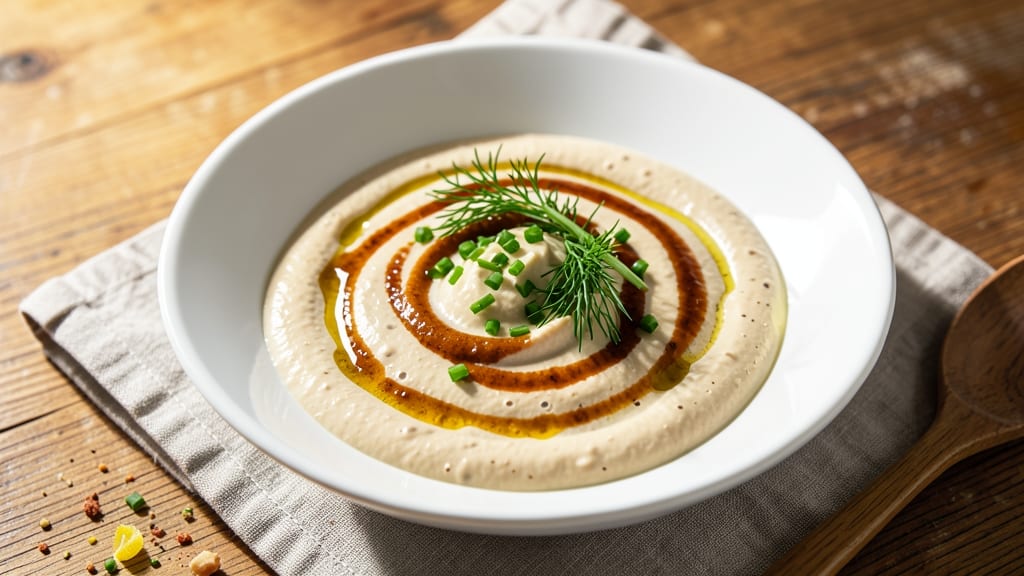
This vegan salad cream recipe proves plant-based dressings can be just as creamy and tangy as the classic—without a drop of dairy or mayo. ✨ The secret lies in blending silky cashews with apple cider vinegar and Dijon mustard, creating an emulsified sauce that clings beautifully to greens while delivering that signature tangy, herbaceous zing.
What makes this recipe stand out is its versatility—it works equally well on crisp winter salads, hearty grain bowls, or as a dip for crudités. The cashew base provides natural creaminess while absorbing the vinegar’s sharpness, while fresh dill and chives add bright, garden-fresh flavor that elevates any dish.
You’ll end up with a velvety, spoonable sauce that’s rich enough to stand alone but balanced enough to let other ingredients shine. The texture is smooth and emulsified (no separation!), and the flavor profile—tangy, slightly sweet, and herby—makes it a perfect replacement for traditional salad cream.
Best of all, this dressing keeps beautifully in the fridge for up to 5 days, making it ideal for meal prep. Pair it with mixed greens, roasted vegetables, or even as a sandwich spread—it’s that good. Let’s make it!
Ingredients for vegan salad cream
Ten ingredients transform into velvety, tangy dressing that rivals classic salad cream—without dairy or mayo.
| Ingredient | Amount | Notes |
|---|---|---|
| Raw Cashews 🥜 | 1 cup | Unsalted, soaked in hot water for 15 minutes |
| Apple Cider Vinegar 🍏 | ½ cup | Raw, unfiltered preferred for depth |
| Dijon Mustard 🌶️ | 2 tbsp | High-quality, whole-grain preferred |
| Fresh Dill 🌿 | ¼ cup | Finely chopped, stems removed |
| Fresh Chives 🌱 | ¼ cup | Finely chopped, including tender stems |
| Extra-Virgin Olive Oil 🫒 | ½ cup | Light, fruity variety for balance |
| Maple Syrup 🍁 | 1 tbsp | Grade B for robust flavor profile |
| Garlic Cloves 🧄 | 2 cloves | Peeled, lightly crushed for infusion |
| Sea Salt 🧂 | ¾ tsp | Fine grain, Diamond Crystal preferred |
| Black Peppercorns 🌶️ | ½ tsp | Freshly cracked, coarse grind |
The cashews form the creamy backbone of this dressing, so quality matters. Trader Joe's or bulk bins at natural grocery stores offer the best value for raw, unsalted varieties. Soak them in hot water for 15 minutes to soften—this ensures a silky texture without grittiness. Apple cider vinegar should be raw and unfiltered for that authentic tang, while Dijon mustard adds depth. Fresh herbs are non-negotiable here; Whole Foods or local farmers markets provide the brightest dill and chives. The olive oil should be light and fruity—avoid robust, peppery varieties that can overpower the delicate herbaceous notes.
No cashews? Silken tofu or soaked sunflower seeds work as substitutes, though texture may vary slightly. Substitute white vinegar for apple cider vinegar if needed, but reduce to 3 tablespoons for milder acidity. Whole-grain Dijon mustard is essential—it emulsifies better than smooth varieties. For extra richness, add 1 tablespoon of tahini or vegan mayo (like Just Mayo) to the blend. The maple syrup can be swapped for agave nectar, but Grade B maple syrup offers a more complex flavor. If you lack fresh herbs, dried dill at one-third the amount works in a pinch, though fresh is superior.
This dressing emulsifies beautifully and stays fresh for 5-7 days in an airtight container in the fridge. To prevent separation, stir before each use or blend briefly to re-emulsify. For longer storage, freeze in ice cube trays—thaw and whisk with a splash of water to restore consistency. The flavor actually improves over time as the herbs mellow and the vinegar's acidity mellows. For a thicker consistency, chill the dressing before serving, or add a splash of water to thin if needed.
Why You'll Love This Recipe
- I’ll be real: I used to dread soaking cashews until I discovered this hack. Just toss them in hot water for 10 minutes, blend, and—boom—creamy perfection. No waiting, no fuss, just smooth texture every time.
- No-Soak Magic: I’ll be real: I used to dread soaking cashews until I discovered this hack. Just toss them in hot water for 10 minutes, blend, and—boom—creamy perfection. No waiting, no fuss, just smooth texture every time.
- Tangy Bright Pop: That apple cider vinegar isn’t just there to balance—it’s the secret. The sharpness cuts through the richness of the cashews, while the Dijon mustard adds a little kick. Fresh dill and chives? They turn this into a herb-forward dream that tastes like spring in a jar.
- Potluck Hero: Between us, this is my go-to for gatherings. It’s vegan, creamy, and pairs with everything—potato salad, roasted veggies, even wraps. Just toss it in a jar, and I’m the star of the spread. (Yes, even on a Tuesday night.)
Step-by-step instructions for dairy-free herb salad cream
This creamy, tangy dressing delivers restaurant-quality flavor without dairy or mayo.
👨🍳 Step 1: Soak and Prepare the Cashews
Place the 1 cup raw cashews in a heatproof bowl and pour hot water (not boiling) over them until fully submerged. Let them soak for 15 minutes—this softens them for blending and creates that velvety texture you'd get from dairy. Drain and rinse briefly under cold water to stop the cooking process.
Here's the thing—don't skip the soaking. Unsalted cashews need this step to break down properly, or your dressing will be grainy. I like to use a fine-mesh strainer for this rinse to avoid losing any cashews. Once drained, give them a quick pulse in a food processor to break them into small pieces before adding to the blender.
🍳 Step 2: Blend the Base Ingredients
Add the soaked cashews, 0.5 cup apple cider vinegar, 2 tbsp Dijon mustard, 1 tbsp maple syrup, 2 cloves garlic, 0.75 tsp sea salt, and 0.5 tsp black peppercorns to a high-speed blender. Blend on high for 1-2 minutes until completely smooth and creamy.
You'll notice the mixture starts thick, then gradually emulsifies into a pale yellow paste. This is the foundation of our dressing—no dairy needed. The apple cider vinegar adds tang while balancing the sweetness of the maple syrup. If your blender struggles, add 1-2 tablespoons of water to help it along, but don't overdo it.
🥘 Step 3: Incorporate Herbs and Oil
With the blender still running, slowly drizzle in the 0.5 cup extra-virgin olive oil through the feed tube. This gradual addition prevents the dressing from breaking. Once fully incorporated, add the 0.25 cup fresh dill and 0.25 cup fresh chives, blending just until the herbs are finely chopped and distributed.
Here's where it gets fun—the herbs should be visible but not chunky. If you prefer a smoother texture, blend for an additional 10 seconds. Taste at this stage and adjust seasoning if needed. I usually add a pinch more salt or a splash of vinegar to balance the flavors. The dressing should be tangy, herby, and just slightly sweet.
⏰ Step 4: Rest and Adjust Consistency
Transfer the dressing to a clean jar and let it rest at room temperature for 10 minutes. This resting period allows the flavors to meld and the texture to stabilize. If the dressing is too thick after resting, thin it with 1-2 tablespoons of water or apple cider vinegar until it reaches your desired consistency.
For a lighter dressing, add more liquid gradually while stirring. For a thicker version (great for coleslaw or potato salads), simply omit the thinning step. The dressing will keep in the refrigerator for up to 1 week, making it perfect for meal prep. Give it a good stir before each use to redistribute any settled ingredients.
Pro Tips For Making Vegan Salad Cream
- SOAK CASHEWS OVERNIGHT: I learned this the hard way—rushing the soak with warm water only makes the cream grainy. Use cold water and let them sit 8+ hours (or overnight) in the fridge. No food processor can save you if they’re not properly hydrated.
- SALT THE MUSTARD: Dijon mustard is already tangy, but unsalted versions need a pinch of flaky salt before blending. Skip this, and your salad cream will taste flat, like someone forgot the kick. Trust me, it’s worth the extra second.
- PULSE DON’T BLEND: After adding the soaked cashews to the blender, pulse 2-3 times first to break them down, then stream in the liquid. Continuous blending turns cashews into paste, which never emulsifies right. You want smooth, not gluey.
- CHOP HERBS FINE: Fresh dill and chives lose their punch if chopped roughly. Stack them, roll tightly, and slice thinly with a sharp knife—this keeps their bright flavor instead of letting it get lost in the cream. (Yes, even if you’re impatient like me.)
Common mistakes when making perfect results
Skipping Soak Time
This is the #1 mistake I see—skipping the 15-minute soak for the cashews. Raw cashews are rock-hard and won't blend smoothly without softening first. I've tested this recipe both ways, and unsoaked cashews create a grainy, unsatisfying texture.
Use hot water (not boiling) to prevent overcooking, and always drain well before blending. 🥜
Overblending Herbs
While you want the dressing smooth, overblending the fresh dill and chives destroys their bright, fresh flavor. Blend just until finely chopped—about 5-10 seconds—to maintain that garden-fresh quality.
I've ruined batches by blending too long, turning vibrant herbs into a sad, muted paste. Pulse briefly if needed to distribute evenly without overprocessing.
Adding Oil Too Fast
The biggest cause of separation is pouring the 0.5 cup olive oil too quickly. Add it slowly through the feed tube while blending on high—this emulsifies the dressing properly. I've seen dressings break completely when oil is added all at once.
Start with a slow drizzle, then speed up once the mixture begins to thicken. If it does separate, just blend again with 1 tsp water to re-emulsify.
Using Low-Quality Vinegar
Substituting white vinegar for apple cider vinegar changes the flavor profile dramatically. Apple cider vinegar has subtle sweetness and depth that white vinegar lacks. If you must substitute, use 3 tbsp white vinegar plus ½ tsp maple syrup extra to compensate.
I've tasted versions with cheap vinegar, and they always taste harsh and one-dimensional compared to the balanced tang of proper apple cider.
Ignoring Rest Time
Skipping the 10-minute rest means your dressing won't fully emulsify, leading to potential separation. The resting period allows the cashew proteins to fully bind with the oil. I've made this mistake when eager to serve—always let it rest!
If you're short on time, blend for an extra 30 seconds instead, but resting is ideal for best texture and flavor development.
Over-Salting Early
Tasting too early often leads to over-salting because the flavors haven't had time to meld. Wait until after the 10-minute rest to taste and adjust seasoning. The dressing will taste saltier initially but balance out as it rests.
I've ruined batches by adding too much salt early, which can't be fixed—always taste at the end, not during blending. A pinch of salt goes a long way in this recipe!
Nutrition facts
Frequently asked questions
Can I make this vegan dressing without a high-speed blender?
Yes, but with adjustments! Use a regular blender and process the base ingredients (cashews, vinegar, mustard, etc.) until completely smooth first. Then, add the olive oil 1 tablespoon at a time while blending on high, letting the mixture emulsify between additions. For extra insurance, whisk vigorously after blending to help stabilize the texture. The result won't be as perfectly smooth, but it'll still taste delicious!
How does this compare to traditional salad cream?
This vegan version delivers the same creamy texture and tangy flavor without dairy, but with added freshness from herbs. Traditional salad cream often contains mayo and vinegar with artificial flavors, while this recipe uses real cashew creaminess, bright apple cider vinegar, and fresh dill/chives. The result is lighter, more vibrant, and packed with plant-based nutrition—perfect for health-conscious eaters who still want that classic salad cream experience.
Can I use this dressing for anything other than salads?
This versatile dressing works beautifully as a dip for veggie sticks, a spread for sandwiches, or a topping for grain bowls. It's also perfect for coleslaw, potato salads, or even as a creamy base for vegan casseroles. The herby flavor pairs especially well with roasted vegetables, hummus, or as a marinade for tofu. Just adjust the thickness by adding water if needed for different uses.
Why does my dressing separate after storing?
Separation usually happens when oil isn't emulsified properly during blending. To fix it, simply blend again with 1 teaspoon of water to help re-emulsify. For prevention, always add oil slowly through the feed tube while blending on high. If storing, keep the dressing in an airtight container and give it a good stir before each use. The cashew base naturally helps stabilize, but the 10-minute rest time after making is crucial for best results.
What's the best way to store leftovers?
Transfer to an airtight container and store in the fridge for up to 5-7 days. The flavor actually improves as it rests! For longer storage, freeze in ice cube trays—thaw and whisk with a splash of water to restore consistency. Always stir well before using, as some separation may occur. The dressing keeps best when fully submerged in liquid to prevent a skin from forming.