Salads
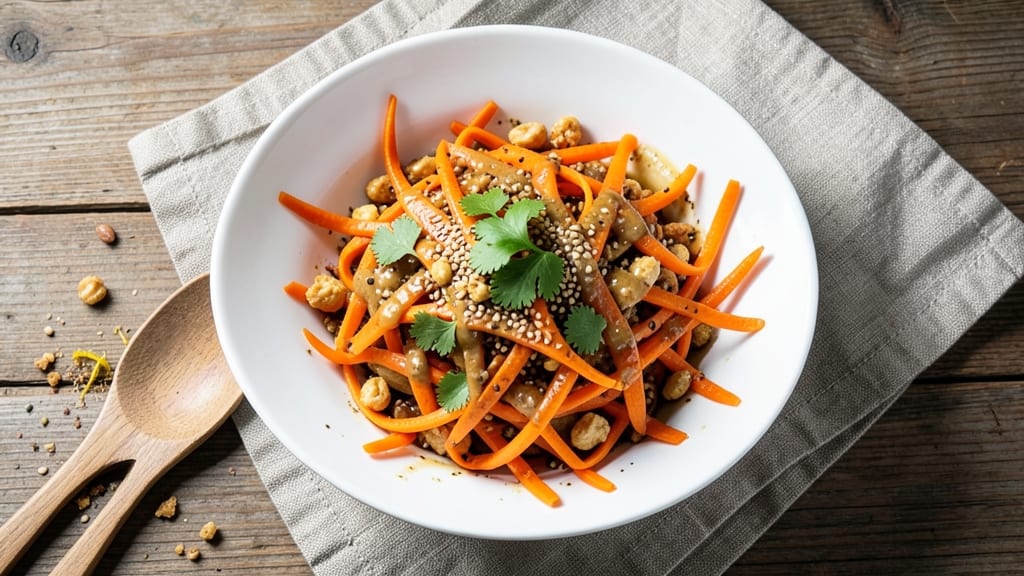
This carrot sesame salad recipe transforms humble carrots into a vibrant, crunchy masterpiece with a nutty dressing that balances sweetness and savory depth. The secret lies in julienning carrots for delicate ribbons that stay crisp, while toasted sesame seeds and a tahini-based dressing add layers of texture and flavor.
I developed this recipe after craving something fresh, satisfying, and packed with plant-based protein—without relying on heavy ingredients.
The beauty of this salad is its versatility—it works as a light main dish or a vibrant side. The dressing, made with sesame oil, rice vinegar, and a touch of maple syrup, clings to the carrots while keeping them bright and crisp.
Toasted sesame seeds and crushed peanuts add crunch, while optional add-ins like cucumber or edamame introduce freshness and extra protein. It’s the kind of salad that stays exciting even after the third bite.
What makes this recipe stand out is the harmony of textures: tender carrots, crispy seeds, and creamy tahini create a satisfying contrast in every forkful.
The dressing’s nutty, slightly tangy notes complement the carrots’ natural sweetness, making it a dish that’s as pleasing to the palate as it is to the eye. Perfect for meal prep, potlucks, or a quick weeknight dinner, this salad proves healthy eating can be bold and delicious.
For an extra touch, garnish with fresh cilantro or lime zest to brighten the flavors. Serve chilled or at room temperature—either way, it’s a crowd-pleaser that shines on its own or alongside grilled proteins. Let’s bring this vibrant, nutrient-packed salad to your table.
Ingredients for carrot sesame salad
Fresh carrots, nutty tahini, and toasted sesame create this vibrant, protein-packed salad masterpiece.
| Ingredient | Amount | Notes |
|---|---|---|
| Organic Carrots 🥕 | 4 medium | Julienned into ribbons |
| Sesame Seeds 🌰 | ¼ cup | Toasted until golden |
| Crushed Peanuts 🥜 | ¼ cup | Or sub almonds |
| Tahini 🥛 | ¼ cup | Sesame paste preferred |
| Rice Vinegar 🍶 | ¼ cup | Unseasoned preferred |
| Maple Syrup 🍯 | 2 tbsp | Pure grade B |
| Sesame Oil 🫒 | 1 tbsp | Toasted sesame oil |
| Soy Sauce 🍶 | 1 tbsp | Low-sodium preferred |
| Garlic Cloves 🧄 | 2 cloves | Minced for dressing |
| Fresh Cilantro 🌿 | ¼ cup | Chopped for garnish |
| Lime 🍋 | 1 whole | Zested for brightness |
| Cucumber 🥒 | 1 small | Julienned for crunch |
| Edamame 🌱 | ½ cup | Shelled, optional protein |
| Salt 🧂 | ½ tsp | Sea salt preferred |
| Black Pepper 🌶️ | ¼ tsp | Freshly ground |
The carrots are the star—organic carrots with bright orange color shine best. Trader Joe's and Whole Foods carry the best quality, but any firm, straight carrots work. Julienning them into ribbons takes practice—use a sharp mandoline for clean slices. The sesame seeds and peanuts should be toasted until golden; Costco sells bulk sesame seeds at a great price. For the tahini, Kirkland Signature is my go-to brand—smooth and consistent. Fresh garlic matters here; pre-minced garlic loses flavor fast.
No sesame seeds? Toasted pumpkin seeds work in a pinch. Sub almonds for peanuts if you prefer a milder crunch. The dressing can be made ahead—store it in a jar for up to 5 days in the fridge. For extra protein, add shelled edamame or chickpeas. The cucumber adds refreshing crunch; if it's watery, pat it dry before julienning. The lime zest brightens everything—Mexican limes have more punch than regular limes, but any will do. For a sweeter version, add another tablespoon of maple syrup.
This salad stays crispest when served chilled. Store components separately: carrots and cucumber in one container with a damp paper towel, dressing in a separate jar. Toss everything together just before serving to maintain texture. The dressing keeps for 1 week in the fridge, while the raw veggies hold for 5 days. For meal prep, portion into individual containers—it’s perfect for lunches or potlucks. Garnish with fresh cilantro right before eating to preserve its vibrant color.
Why You'll Love This Recipe
- I’ll be real: this recipe uses stuff I already have. Tahini, rice vinegar, peanuts—none of it’s exotic or expensive. If you’re stocking up for a busy week, this salad is the ultimate “use what’s there” dish. Plus, the leftovers taste just as good cold the next day.
- No-Shave Required: I’ll admit, I used to skip this step—peeling carrots feels like overkill for a salad. But here’s the thing: the thin outer skin adds texture, and you can just scrub them under cold water if you’re in a rush. That tahini dressing does the heavy lifting, so the prep is basically chop-and-go.
- Crunchy-Creamy Magic: Between us, the combo of toasted sesame seeds and crushed peanuts on that crisp carrot bite? It’s like a flavor hug. The tahini and rice vinegar cut through the richness just enough—sweet, nutty, tangy—without tasting like you’re trying too hard.
- Lunchbox Hero: Honestly, this is my go-to for packing leftovers. The dressing clings to the shredded carrots, so it stays fresh for days (yes, even if you forget it in the car). Sprinkle extra sesame seeds on top, and it looks fancy enough for a potluck but zero effort.
Step-by-step instructions for carrot sesame salad
This vibrant salad balances crisp vegetables with a rich, nutty dressing that's simple yet deeply flavorful.
Prepare the Vegetable Components
Using a mandoline or sharp knife, julienne the 4 medium organic carrots into long, thin ribbons. I like to cut them on the bias for extra length and visual appeal. Transfer the julienned carrots to a large mixing bowl and set aside.
Next, peel the 1 small cucumber and cut it into similar julienne strips. The cucumber adds refreshing crunch that complements the carrots' natural sweetness. If you prefer, you can also use a peeler to create thin cucumber ribbons for a more rustic texture.
For the optional protein, shell the 0.5 cup edamame and set aside. If you're making this ahead, skip adding the edamame until just before serving to maintain its vibrant green color and crisp texture.
Toast the Nuts and Seeds
In a dry skillet over medium heat, toast the 0.25 cup sesame seeds for 2-3 minutes until they turn a rich golden brown color and release their nutty aroma. Watch them carefully—they burn quickly. Transfer the toasted seeds to a small bowl and let them cool.
In the same skillet, toast the 0.25 cup crushed peanuts for 1-2 minutes until they're fragrant and lightly golden. The peanuts add a satisfying crunch that balances the salad's soft textures. Let them cool completely before adding to the salad.
Here's the thing—don't skip toasting these ingredients. The heat enhances their natural oils and flavors, creating a more complex, aromatic salad that tastes far more restaurant-quality than store-bought versions.
Create the Tahini Dressing
In a medium bowl, whisk together the 0.25 cup tahini, 0.25 cup rice vinegar, 2 tbsp maple syrup, 1 tbsp sesame oil, 1 tbsp soy sauce, and the 2 minced garlic cloves. The mixture will be thick—this is normal. Gradually whisk in 2-3 tablespoons of water until the dressing reaches a smooth, pourable consistency.
Zest the 1 whole lime and add to the dressing along with the 0.5 tsp salt and 0.25 tsp black pepper. The lime zest adds a bright citrus note that cuts through the richness of the tahini. Taste and adjust seasoning—you might want to add a touch more soy sauce for saltiness or lime juice for acidity.
This dressing is the heart of the salad. The tahini provides creaminess, while the maple syrup and rice vinegar create a perfect balance of sweet and tangy. The garlic and sesame oil add depth that makes this dressing unforgettable.
Assemble the Salad
In the large mixing bowl with the julienned carrots and cucumber, add the toasted sesame seeds, toasted peanuts, shelled edamame, and the 0.25 cup chopped fresh cilantro. Gently toss everything together with a large spoon or your hands, being careful not to crush the vegetables.
Drizzle the tahini dressing over the salad and toss again until everything is evenly coated. The dressing should cling to the vegetables without making them soggy. If you prefer a lighter dressing, reserve some and add it gradually.
Let the salad sit for 5-10 minutes before serving. This brief resting period allows the flavors to meld together, creating a harmonious balance of textures and tastes. The carrots will soften slightly, the cucumber will release its juices, and the dressing will absorb into the vegetables just enough to enhance their natural sweetness.
Serve and Enjoy
Transfer the salad to a serving platter and garnish with additional chopped cilantro if desired. The presentation should showcase the vibrant colors—deep orange carrots, pale green cucumber, and the golden-brown peanuts and seeds.
Serve immediately while the vegetables are still crisp and the dressing is fresh. This salad pairs beautifully with grilled proteins, sushi, or as a light lunch on its own. For extra freshness, squeeze a bit of lime juice over the top just before serving.
Real talk: This salad keeps well in the refrigerator for up to 2 days, but the edamame may lose some of its crispness. If you're making it ahead, store the dressing separately and toss it with the vegetables just before serving for the best texture and flavor.
Pro Tips For Making Carrot Sesame Salad
- SHRED CARROTS SMALL: Thin, matchstick-sized shreds pack more flavor and texture than thick strips—your mouth will notice the difference. Use a mandoline if you’re impatient (I was skeptical until I tried it), but a sharp knife works fine if you take your time.
- TOAST PEANUTS FIRST: Skip the raw peanuts—they’ll taste bland and mealy. Toss them in a dry pan over medium heat for 2-3 minutes until golden and fragrant. (Yes, even if you’re impatient like me, don’t rush this.)
- WHISK TAHINI THIN: Tahini clumps like glue if you pour it straight in. Thin it with 1-2 tablespoons warm water first, then whisk it into the dressing. (Your future self will thank you for avoiding that lumpy mess.)
- SAVE SESAME SEEDS: Sprinkle half the sesame seeds after tossing the salad—this keeps them crisp and adds a satisfying crunch. The other half in the dressing? Fine, but don’t skip the topping. (It’s the thing that matters most.)
Serving suggestions for carrot sesame salad
Plating for Vibrant Appeal
Arrange the salad in a wide, shallow bowl to showcase its colorful layers. I like using a ceramic or glass dish—it makes the orange carrots and green cucumber pop against the white plate.
For extra drama, create a rainbow pattern by arranging the julienned vegetables in concentric circles. Garnish with a sprinkle of toasted sesame seeds and crushed peanuts in the center to draw the eye. 🌈
Pairing with Proteins
This salad balances beautifully with grilled chicken or tofu. Serve it alongside teriyaki-glazed salmon for a complete meal, or pair it with sushi rolls for a fresh, Asian-inspired spread. The nutty dressing complements the umami flavors of grilled meats, while the crisp vegetables cut through richer dishes.
For a vegan option, add marinated tempeh or seared mushrooms to the plate.
Beverage Pairings
A sparkling jasmine tea or green tea enhances the salad’s delicate flavors without overpowering them. For a refreshing twist, try a citrusy white wine spritzer—mix Sauvignon Blanc with sparkling water and a splash of lime.
If you prefer beer, a light lager like Asahi keeps the palate clean. Avoid heavy, oaky wines or dark beers that could clash with the tahini’s creaminess. 🍶
Meal Prep Presentation
When packing for lunch, use mason jars with the dressing at the bottom, followed by edamame, then the julienned veggies. This keeps everything fresh and prevents sogginess. For a restaurant-style presentation, serve on a slate board with small bowls for garnishes like lime wedges or extra sesame seeds.
A drizzle of chili oil adds a spicy kick for those who love heat. 🍽️
Garnish Like a Pro
Fresh cilantro leaves and lime zest brighten the dish visually and add a zesty contrast. For a smoky touch, sprinkle toasted nori flakes over the top. If you’re feeling fancy, add edible flowers like nasturtiums for a pop of color.
Always garnish just before serving to keep ingredients fresh and vibrant. The key is to enhance, not overpower—let the salad’s natural flavors shine.
Nutrition facts
Frequently asked questions
Can I make this salad without tahini?
Yes! If you're sensitive to sesame or don't have tahini, substitute it with 2 tablespoons of peanut butter (thinned with water) or 1 tablespoon of olive oil plus 1 tablespoon of miso paste. The dressing will still be creamy and flavorful, though the nutty depth will be slightly different. For a vegan alternative, ensure your peanut butter has no added honey.
How do I keep the carrots from getting soggy?
Julienned carrots stay crisp best when handled carefully. Toss them with the dressing just before serving, and avoid overmixing. For meal prep, store the carrots and dressing separately—combine them only when ready to eat. If they soften slightly, serve them chilled to maintain their texture. The key is timing: dress the salad no more than 30 minutes before serving.
What’s the best way to toast sesame seeds?
Toast sesame seeds in a dry skillet over medium heat for 2-3 minutes, stirring constantly, until they turn golden brown and smell nutty. Watch closely—they burn quickly! For extra flavor, add a pinch of salt or a tiny bit of maple syrup while toasting. Let them cool completely before adding to the salad to prevent excess oil release. Pro tip: Toast in small batches to avoid overcrowding the pan.
Can I make this salad ahead of time?
Store the dressing separately in a jar for up to 5 days and the julienned veggies (carrots, cucumber) wrapped in a damp paper towel for 3 days. Toss everything together just before serving to keep the texture crisp. For edamame or other perishable add-ins, add them fresh when ready to eat. The flavors actually meld better after a night in the fridge!
Is this salad gluten-free?
Mostly, but check your ingredients! The recipe is naturally gluten-free, but verify that your soy sauce (use tamari instead if needed), sesame oil, and tahini are certified gluten-free. If you're avoiding sesame, substitute with sunflower seed butter or almond butter in the dressing. Always double-check labels for hidden gluten in processed ingredients.