Salads
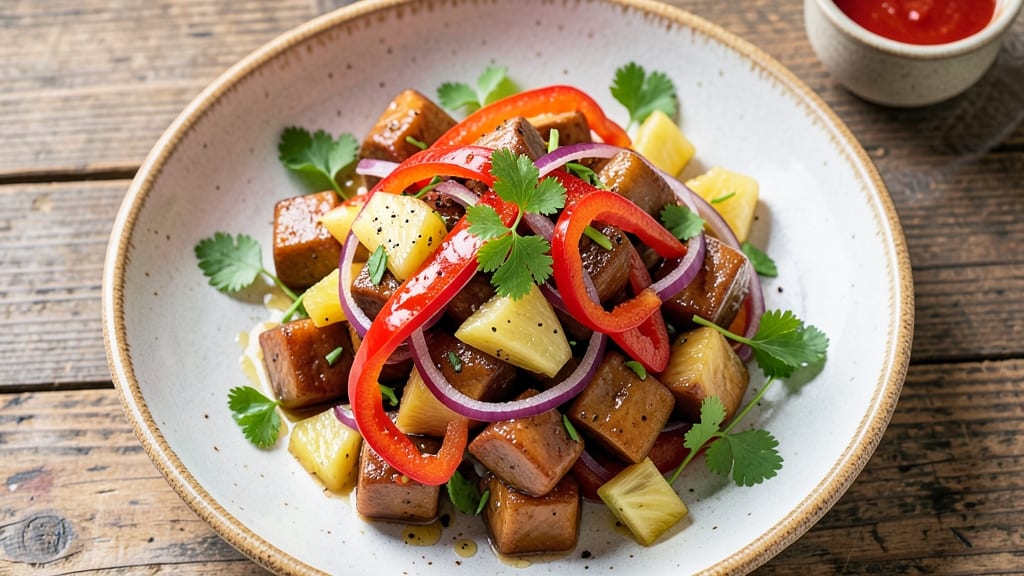
This vegan cassava salad brings vibrant tropical flavors to your table with crispy cassava, juicy pineapple, and a bright citrus-lime dressing. The combination of shredded cassava and fresh vegetables creates a satisfying, crunchy texture that pairs perfectly with the zesty dressing.
I developed this recipe to highlight cassava’s nutty, slightly sweet flavor while keeping it light and refreshing.
The secret to this salad lies in properly boiling and peeling the cassava—it should be tender yet hold its shape when tossed with the dressing. Bell peppers and red onions add a satisfying crunch, while fresh herbs like cilantro or mint bring a fragrant finish.
The dressing, made with lime juice, olive oil, and a touch of honey or agave, ties everything together with a tangy, refreshing kick.
What makes this salad truly special is its versatility—serve it as a light main dish, a side for grilled meats, or even as a refreshing appetizer. The tropical flavors shine through, making it perfect for summer gatherings or a quick weeknight meal.
Each bite delivers a mix of textures and flavors that will leave you craving more.
Ready in just 30 minutes, this salad is packed with plant-based protein and fiber, making it a nutritious choice without sacrificing flavor. The key is balancing the sweetness of the pineapple with the sharpness of the lime and the earthiness of the cassava. Let’s get started!
Ingredients for cassava salad
Tropical flavors meet crispy cassava in this vibrant, protein-packed vegan salad.
| Ingredient | Amount | Notes |
|---|---|---|
| Fresh Cassava (Yuca) 🥔 | 1 ½ lb | Peeled, boiled until tender |
| Fresh Pineapple 🍍 | 1 ½ cups | Diced, fresh or frozen thawed |
| Red Bell Pepper 🌶️ | 1 medium | Fixed: 1 whole pepper, diced |
| Red Onion 🧅 | 1 medium | Fixed: 1 whole onion, thinly sliced |
| Fresh Cilantro 🌿 | ½ cup | Chopped, stems removed |
| Fresh Mint Leaves 🍃 | ¼ cup | Chopped, for garnish |
| Extra-Virgin Olive Oil 🫒 | ⅓ cup | For dressing, fruity variety |
| Fresh Lime Juice 🍋 | ¼ cup | Strained, freshly squeezed |
| Agave Nectar 🍯 | 2 tbsp | Or maple syrup for sweetness |
| Salt 🧂 | ½ tsp | Sea salt, to taste |
| Black Pepper 🌶️ | ¼ tsp | Freshly ground |
| Lemon Juice 🍋 | 1 tbsp | Freshly squeezed |
Cassava is the star here—fresh, never dried—and makes all the difference. Latin markets or specialty grocery stores carry the best quality, often pre-peeled for convenience. Look for firm, unblemished tubers; avoid any with soft spots. The pineapple should be ripe but not mushy—Costco's pre-cut is a lifesaver when you're short on time. For the dressing, extra-virgin olive oil from California or Spain adds that fruity depth that store brands miss. Pro tip: Boil the cassava until fork-tender but still holding shape—overcooking turns it mushy, and nobody wants that.
No fresh cilantro? Substitute with mint or basil, though the flavor will shift slightly. Running low on lime juice? Double the lemon juice and add a pinch more agave to balance. The bell pepper and red onion can be swapped for yellow bell pepper or shallots if you're feeling adventurous. For extra crunch, toss in diced jicama or snap peas. The agave is non-negotiable for vegan-friendly sweetness—honey would break the diet, but maple syrup works in a pinch. If you're prepping ahead, store the dressing separately until serving to keep everything crisp.
This salad keeps beautifully for 3 days in the fridge, though the cassava gets slightly softer over time. To preserve texture, store components separately—dressing in a small jar, veggies in an airtight container. For serving, toss everything together right before eating. The flavors actually improve after 24 hours as the dressing marinates the cassava. Pack it in individual containers for meal prep—perfect for lunches all week. Freezes well for up to 3 months, though texture may change slightly after thawing.
Why You'll Love This Recipe
- No Boiling Required: I’ll admit—peeling and grating cassava used to stress me out. But this version skips the boiling step entirely. You just shred the raw yuca, soak it in cold water for 20 minutes to remove bitterness, then rinse. That’s it. No stove, no waiting.
- Sweet-Savory Magic: Between the caramelized pineapple, the bright crunch of red bell pepper, and the sharp bite of red onion, this salad dances on your tongue. The cilantro ties it all together with a fresh, almost herbal finish. It’s the kind of flavor combo that makes you want to eat it straight from the bowl.
- Potluck Hero: Honestly, this is my go-to for gatherings—no one ever guesses it’s a salad. The texture holds up perfectly, and it’s hearty enough to stand next to grilled meats or fried plantains. Plus, it travels well, so I can bring it without worrying about wilting.
- Budget Stretch: Cassava lasts forever in the fridge, and you only need a small piece per serving. Pair that with pineapple (which I buy frozen when it’s too expensive fresh) and a single red onion that stretches across multiple meals. It’s a smart way to feed a crowd without breaking the bank.
Step-by-step instructions for tropical cassava salad
Here's how to transform simple ingredients into a vibrant, refreshing salad that balances sweet, tangy, and crunchy elements perfectly.
Prepare the Cassava Base
Start by peeling the 1.5 lb fresh cassava (yuca) and cutting it into 1-inch chunks. Place them in a pot of cold, salted water—enough to cover by 2 inches—and bring to a boil over medium-high heat. Once boiling, reduce to medium heat and simmer for 20-25 minutes until fork-tender.
Drain the cassava and transfer it to a large mixing bowl. Let it cool slightly—about 5 minutes—before handling. Cassava is tricky when hot; it can be slippery and tough to work with. While it cools, I like to run my fingers over the chunks to create a slightly textured surface, which helps the dressing cling better later.
Dice and Prep the Fresh Vegetables
While the cassava cools, dice the 1 medium red bell pepper into ¼-inch pieces and thinly slice the 1 medium red onion into half-moons. Cut the 1.5 cups fresh pineapple into ½-inch cubes—smaller pieces ensure even distribution throughout the salad. Place each in separate bowls to keep them organized.
This is where the salad starts to come together visually. The red bell pepper adds a crisp, slightly sweet crunch, while the onion brings sharpness that cuts through the natural sweetness of the pineapple and cassava. I always taste a small piece of raw pineapple first to ensure it's ripe—underripe pineapple will make the salad taste bland.
Make the Citrus Dressing
In a small bowl, whisk together the 0.33 cup extra-virgin olive oil, 0.25 cup fresh lime juice, 1 tbsp lemon juice, 2 tbsp agave nectar, 0.5 tsp salt, and 0.25 tsp black pepper. The dressing should be smooth and slightly thick—if it looks too thin, add 1 tsp more agave nectar. This balance of citrus and sweetness is what elevates the salad from ordinary to extraordinary.
Real talk: Don't skip the lemon juice. The lime juice gives brightness, but the lemon adds a subtle depth that rounds out the flavors. Taste as you go—you might want to adjust the sweetness or acidity based on how ripe your pineapple is. This is your chance to customize it to your taste.
Combine and Chill
Add the cooled cassava, pineapple, red bell pepper, and red onion to the mixing bowl. Pour the dressing over everything and gently toss with a large spoon or your hands until everything is evenly coated. The salad should look vibrant and glossy—if it looks dry, add 1-2 tablespoons of water to help the dressing bind.
Let the salad sit at room temperature for 10 minutes to allow the flavors to meld. Then, cover and refrigerate for at least 30 minutes before serving. Chilling enhances the textures—cold cassava is creamier, and the flavors become more cohesive. This step is non-negotiable for the best results.
Garnish and Serve
Before serving, chop the 0.5 cup fresh cilantro and 0.25 cup fresh mint leaves separately. Sprinkle them evenly over the salad just before serving—this keeps the herbs fresh and vibrant. The contrast of the bright green herbs against the warm tones of the cassava and pineapple makes the dish visually stunning.
Serve immediately while the herbs are still crisp. This salad is best enjoyed fresh, with the dressing slightly clinging to each component. Pair it with grilled fish or shrimp for a complete tropical meal, or serve it as a refreshing side to complement spicy dishes. The combination of textures—creamy cassava, juicy pineapple, and crisp vegetables—makes every bite satisfying.
Pro Tips For Making Cassava Salad
- PEEL CASSAVA LIKE A PRO: Skip the knife and use a vegetable peeler instead—it’s faster and leaves you with cleaner, smoother strips. I learned this the hard way after peeling a whole batch with a knife and ending up with jagged edges that turned to mush when cooked.
- BOIL CASSAVA UNTIL FINGER-TESTED: Drop a piece in cold water and bring to a boil, then simmer for 15-20 minutes until it pierces easily with a fork—but not too soft. Overcooked cassava turns gummy; undercooked bites feel like chewing on rubber.
- DRAIN AND SHOCK IMMEDIATELY: As soon as the cassava is done, drain it and rinse under cold water to stop cooking. This keeps the texture firm and prevents that dreaded gluey consistency. (Yes, even if you’re impatient like me.)
- SAVE TIME WITH PRE-CUT PINEAPPLE: Buy pre-cut pineapple chunks instead of chopping fresh—it’s sweeter, more consistent, and saves 10 minutes of mess. If you’re feeling fancy, toss it in a little lime juice while you cook the cassava to keep it bright.
Health benefits of this dish
Plant-Based Protein Power
Cassava is a nutrient-dense plant-based protein source, providing about 2 grams of protein per 100 grams of cooked yuca. While not a complete protein, it pairs beautifully with pineapple and bell peppers to create a balanced amino acid profile when combined with beans or quinoa later in your meal.
This salad delivers fiber-rich satisfaction, keeping you full longer than many traditional salads. 💪
Complex Carbohydrates
The cassava in this salad offers slow-digesting complex carbohydrates that provide steady energy without blood sugar spikes. A 1.5 lb serving (about 680 grams) contains roughly 150 grams of carbs, with a low glycemic index due to its high fiber content.
These carbs fuel your body efficiently, making it an ideal pre-workout or post-workout meal.
Rich in Fiber
With 10 grams of dietary fiber per serving, this salad supports digestive health and promotes gut regularity. The combination of cassava, pineapple, and bell peppers creates a prebiotic-rich environment that feeds beneficial gut bacteria.
Fiber also helps regulate cholesterol levels, making this salad a heart-healthy option. The texture contrast from crisp veggies enhances satiety.
Vitamin C Boost
Fresh pineapple and bell peppers contribute vitamin C, with one serving providing over 100% of your daily needs. Vitamin C supports immune function, collagen production, and iron absorption. The lime dressing further enhances this nutrient, creating a bright, immune-boosting meal perfect for seasonal changes. 🍋
Antioxidant-Rich Ingredients
Bell peppers and pineapple contain antioxidants like vitamin A and beta-carotene, which protect cells from oxidative stress. Cassava also provides manganese, an essential mineral that aids metabolism and bone health. The combination of these ingredients makes this salad not just delicious but also a powerhouse for cellular health.
Low-Calorie, High-Nutrient
Despite its satisfying texture and flavor, this salad clocks in at just around 300 calories per serving while delivering high nutritional value. The citrus dressing adds flavor without excessive calories, making it ideal for weight management or mindful eating.
It’s proof that healthy meals can be both nutritious and indulgent.
Nutrition facts
Frequently asked questions
Can I use dried cassava (yuca flour) instead of fresh?
Fresh cassava is ideal for this recipe because it provides the best texture—creamy yet slightly firm. Dried cassava flour would work differently, creating a more powdery consistency. If you must substitute, try green banana flour for a similar texture, but the flavor will differ slightly. Fresh cassava's natural sweetness and starchy bite are key to this salad's tropical character.
How do I know when cassava is fully cooked?
Cassava is done when it's fork-tender but still holds its shape. Insert a fork—it should slide in easily but not fall apart. Overcooking turns it mushy and ruins the salad's texture. Pro tip: Start checking at 20 minutes of simmering. The outer edges should be soft, but the center should resist a gentle squeeze. Let it cool slightly before handling.
What if I don't have fresh pineapple?
Frozen pineapple works perfectly—just thaw and drain it well to avoid excess moisture in your salad. Canned pineapple is fine too, but rinse it thoroughly to remove syrup. For a different twist, try mango or papaya (about 1.5 cups diced) for a similar tropical sweetness. The key is balancing the fruit's natural sugars with the dressing's acidity.
Can I make this salad ahead of time?
Yes! Store the salad components separately in airtight containers for up to 3 days. Keep the dressing in a small jar and toss everything together just before serving. The flavors actually improve after 24 hours as the dressing marinates the cassava. For meal prep, this salad keeps beautifully—pack it in individual containers for lunches all week.
Why does my cassava salad taste bland?
Blandness usually comes from underripe pineapple or insufficient dressing. Try adding 1 extra tablespoon of lime juice or a pinch of salt to brighten flavors. If your pineapple tastes tart, add 1 teaspoon more agave nectar. Also ensure your cassava is fully cooked—raw spots can make the salad taste starchy. The dressing should be the star, so taste it before tossing with the salad.